An allergy resource by

An allergy resource by

Expert guide to allergy immunotherapy: Exploring the options for lasting allergy relief
Table of contents:
Table of contents:


Allergy immunotherapy works naturally with the body to tackle the cause of your allergy. The idea is to retrain your oversensitive immune system. Repeated controlled doses of your trigger gradually persuade it to stop seeing the substance as a threat.1 Changes can start during treatment and be effective years after it ends.2
This approach to allergy has been around for more than a century.3 Typically allergy immunotherapy is used in combination with avoidance and short-term relief like antihistamine and corticosteroids and it works completely differently to these medications.4 A course of immunotherapy aims to achieve lasting remission of allergy symptoms and lower the risk of allergies progressing over time, for instance to allergic asthma, according to the National Institute for Health and Care Excellence.4,5
Allergy immunotherapy is available for airborne triggers like pollen and house dust mites, as well as for insect venom.1 There are different forms depending on the trigger and age of the person having treatment. Some are available for children.6 You’ll need an allergy diagnosis first to pinpoint what you’re reacting to. Then your GP can tell you if allergen immunotherapy might be an option, what the side effects can be and how you can get the treatment.
What is immunotherapy for allergies?
Allergy immunotherapy is regular managed exposure to an allergen in the form of a medication. It’s also called allergy desensitization therapy and allergy exposure therapy. Slowly but surely this encourages the body to respond in a normal way to what is, after all, a harmless substance. Over a successful course of treatment, the trigger stops being a trigger.1
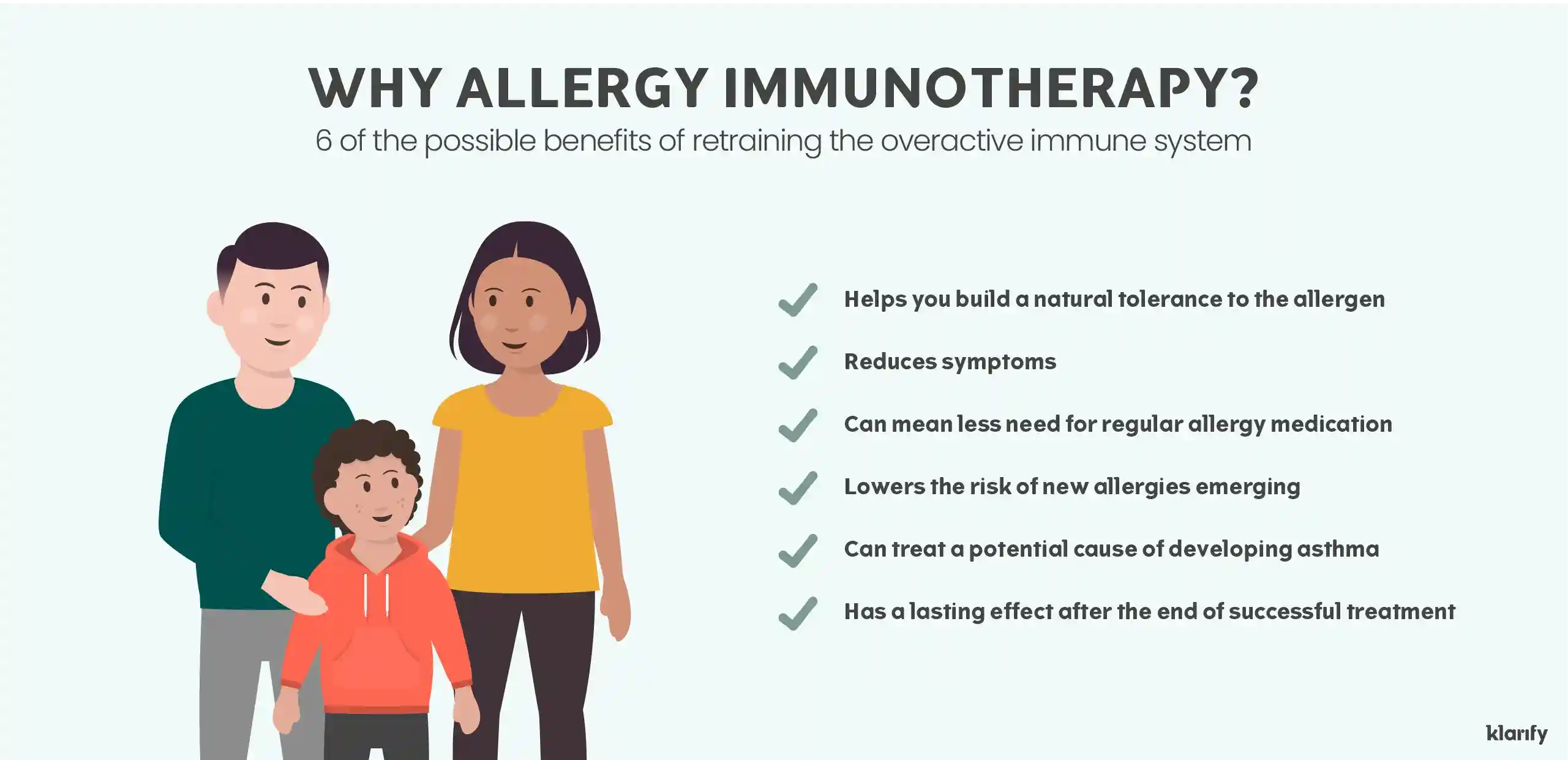
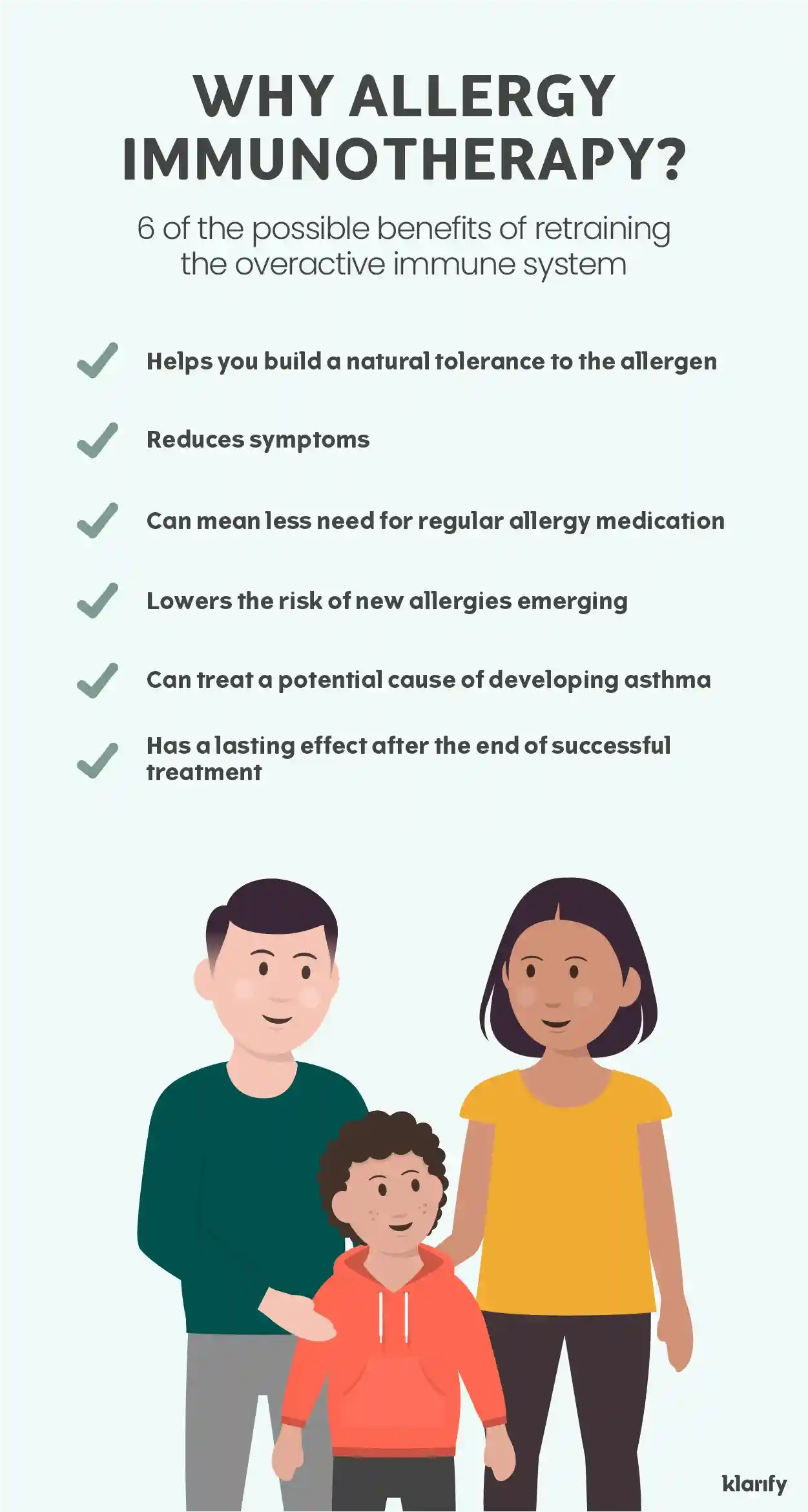
Allergy immunotherapy helps control allergy symptoms but it’s not the same thing as symptomatic medicine.2 That’s a word used to describe antihistamines, corticosteroids, decongestants and other allergy medications you may have tried already for short-term relief.4
Find out how each type of medication fits into the typical allergy treatment plan, as well as who might benefit from allergy immunotherapy and when it may not be a realistic option. You’ll want to know how long it’s going to take to work. Also, what life could look like after allergen immunotherapy.
How is immunotherapy different from symptomatic medicines for treating allergy?
Allergy is a disease. That just means something isn’t working as it should, which is your immune system. Allergy immunotherapy treats this disease while symptomatic medicines target the various ways the disease expresses itself. For instance, antihistamine blocks the effect of the histamine released in an allergic reaction.7 Corticosteroids calm allergic inflammation.8
The first step in an allergy treatment plan is to avoid your trigger. That can be hard to do 100% of the time, for instance if you’re allergic to tiny flying pollen grains, pet dander or dust mites. So you might still get a blocked or runny nose and need treatment.1 The type and form of short-term allergy relief will depend on the nature and severity of your symptoms.4 It may be your GP or allergy specialist also suggests allergy immunotherapy.
Short-term allergy relief (symptomatics) like antihistamine or corticosteroids only works if you keep taking it and the benefits are lost soon after you stop.4 In contrast, allergy immunotherapy aims for lasting effect, says the British Society for Immunology.1
How long does it take for allergy immunotherapy to work?
Allergy immunotherapy can start to work within a few months and you may see a significant improvement in symptoms and short-term medication use during treatment.9 That’s because retraining the immune system happens in multiple phases, according to Diverse Immune Mechanisms of Allergen Immunotherapy for Allergic Rhinitis With and Without Asthma (Journal of Allergy and Clinical Immunology, March 2022). Treatment reduces allergic responses, shifts the immune system to a less reactive state and gradually builds long-term tolerance through regulatory cells and blocking antibodies. This process typically takes at least 3 years and up to 5 years to achieve full effectiveness.10,11
When might allergy immunotherapy be the right treatment option?
Allergy immunotherapy could be a next step if one or more of these factors apply:
1. Your allergy-related stuffy, runny nose and itchy, watery eyes are interfering with everyday life.4,5
2. You’ve tried to avoid your allergic triggers but it’s just too hard to do consistently.
3. Symptomatic allergy medications might have worked once (or might not) but now your allergies seem as if they’re out of control.
4. You might feel reliant on regular allergy medicines but want to avoid having to keep taking them, at least in the same dosages, into the long term.
5. You’re worried about your allergic rhinitis or hay fever symptoms progressing to asthma. Or that you might develop other allergies.4,5
6. You’re allergic to insect stings and the treatment could lower the risk of a life-threatening allergic reaction in the case of accidental exposure.4
Some people spend years trying to manage symptoms conventionally before undergoing allergy immunotherapy treatment. Don’t wait that long if you don’t have to.

When might allergy immunotherapy not possible?
The doctor will consider your whole medical history before they suggest this treatment. Allergy immunotherapy may not be possible if you have severe or poorly controlled asthma.12 Dental treatment or mouth ulcers can delay the start or cause a short break in allergen immunotherapy given as tablets or drops under the tongue. It would also be unusual to begin treatment while expecting a baby, although you might be able to continue if you fall pregnant during a course of tablets, drops or injections.12
Read the patient leaflet carefully because it’ll give you the full list of warnings and precautions.
Can you get rid of allergies?
Successful allergy immunotherapy acts like a dimmer switch on the immune system, dialling down the allergic response and your allergy symptoms. Some people may find they return but many will enjoy long-term allergy relief.6,13 No more sneezing at pollen or dust mites, or not nearly as much.1,6
Bringing your allergies under control can be life-changing as it can mean:4,5
- Less need for short-term relief medicine
- Less risk of new allergies developing
- Less risk of allergic rhinitis progressing to allergic asthma
Does allergy immunotherapy help with asthma?
It’s common to have both allergic rhinitis and allergic asthma, and for asthma to be allergy-related. You may be allergic to dust mites, pollen, pet dander or mould and have an asthma flare-up when exposed to that substance. So one way to tackle your asthma triggers could be to tackle your allergies, for instance with allergy immunotherapy.6,12

Which allergies does allergy immunotherapy treat?
Allergy immunotherapy for allergic rhinitis (hay fever) is available to treat allergies including:6
- House dust mites
- Tree pollen
- Grass pollen
- Pet dander
There are different forms of hay fever immunotherapy and not all are available to everyone with allergies. It depends on your age and allergy trigger, as well as your medical history.12
Treatment for allergies to bee and wasp (hymenoptera) stings is known as venom immunotherapy (VIT).
What are the different types of allergy immunotherapy?
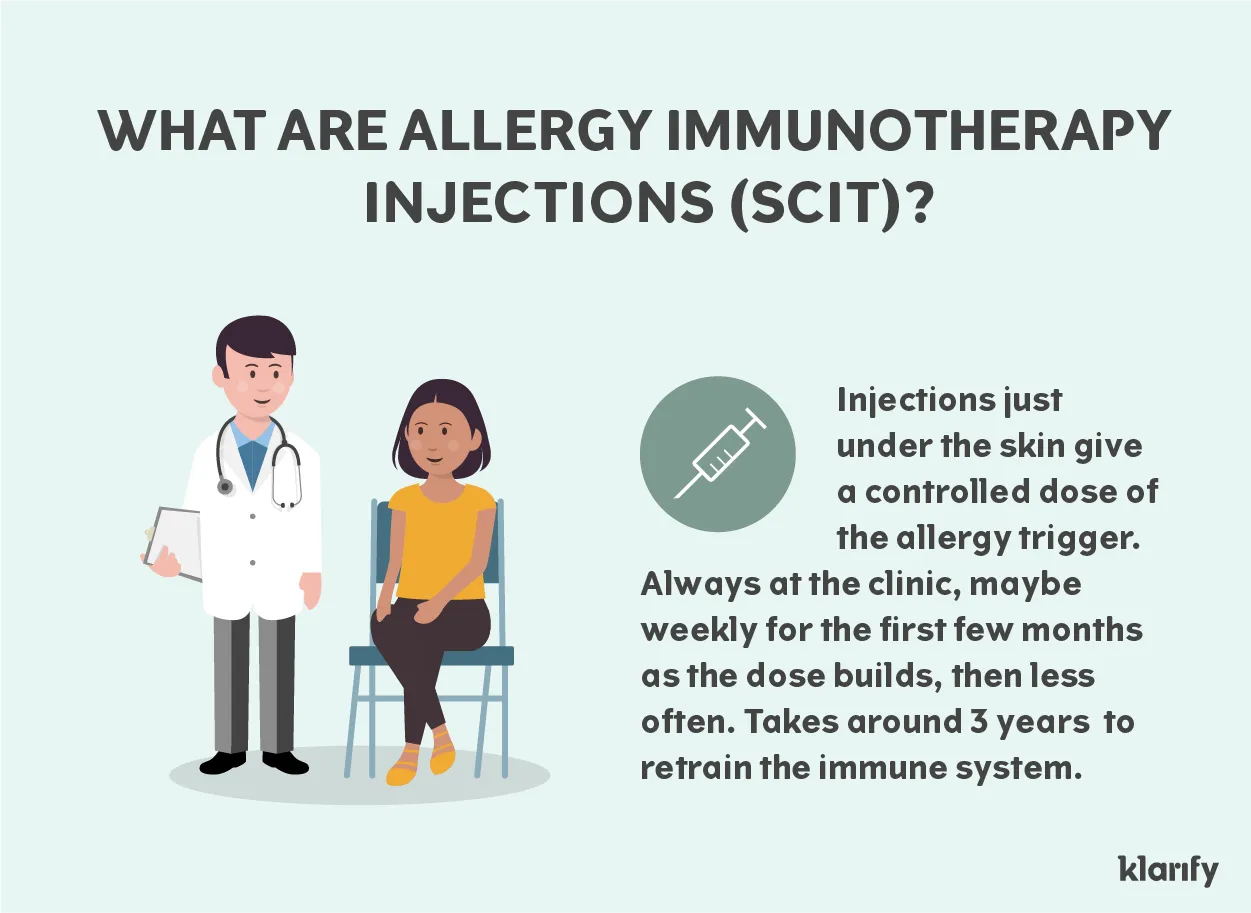
The two main types of allergy immunotherapy are subcutaneous immunotherapy (SCIT) and sublingual immunotherapy (SLIT).3,12 Subcutaneous involves injections just under the skin, while sublingual is fast-dissolving tablets, given daily under the tongue.3,12 SLIT can also come as drops or a spray, which may be available in specialist clinics on a case-by-case basis although they’re not licensed by the Medicines and Healthcare products Regulatory Agency (MHRA).11
All types of allergy immunotherapy contain the substance you’re allergic to. Exposing you to these problem proteins in a controlled gentle way is the treatment. The immune system learns there’s no need to react.1 Some practical details are different depending on whether you have tablets or injections, such as where treatment happens.12
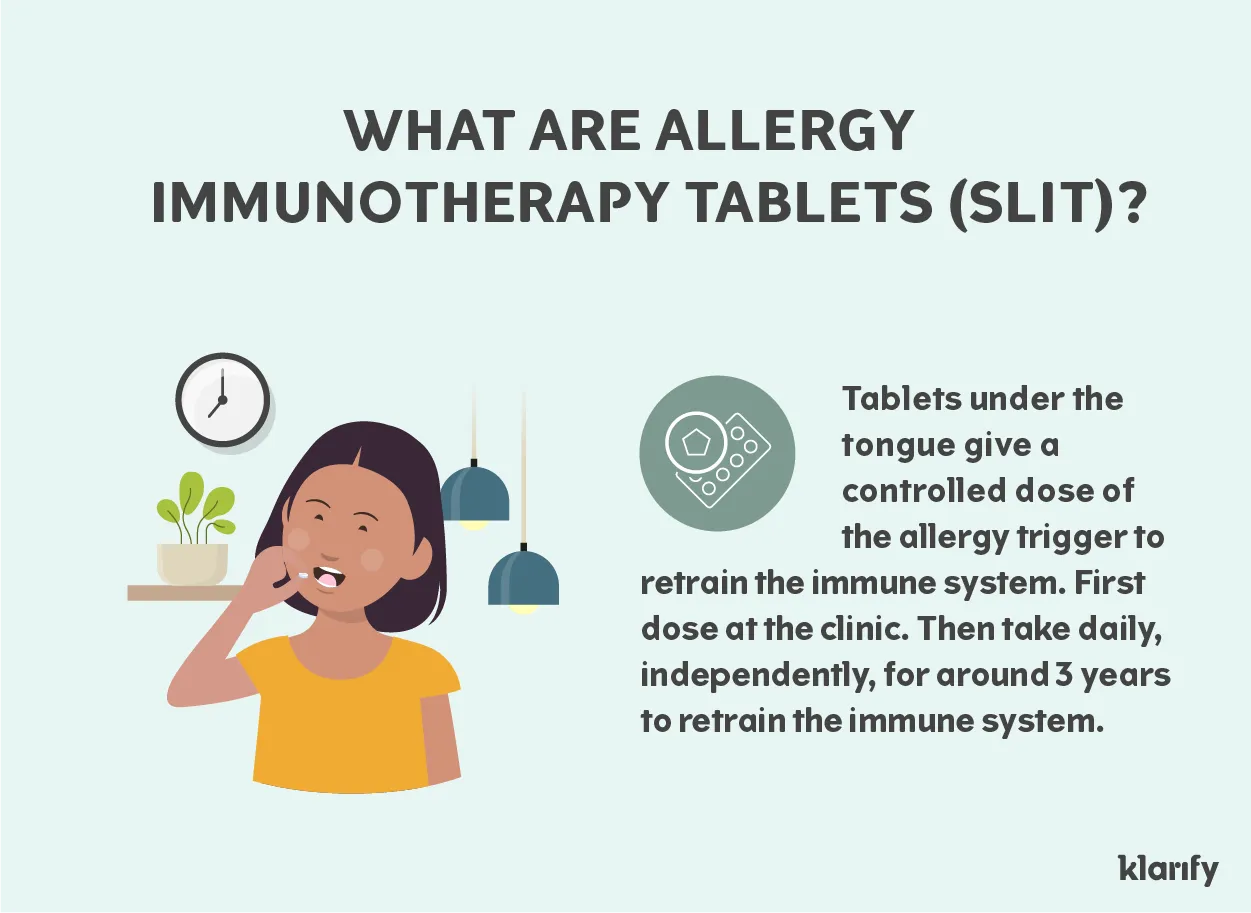

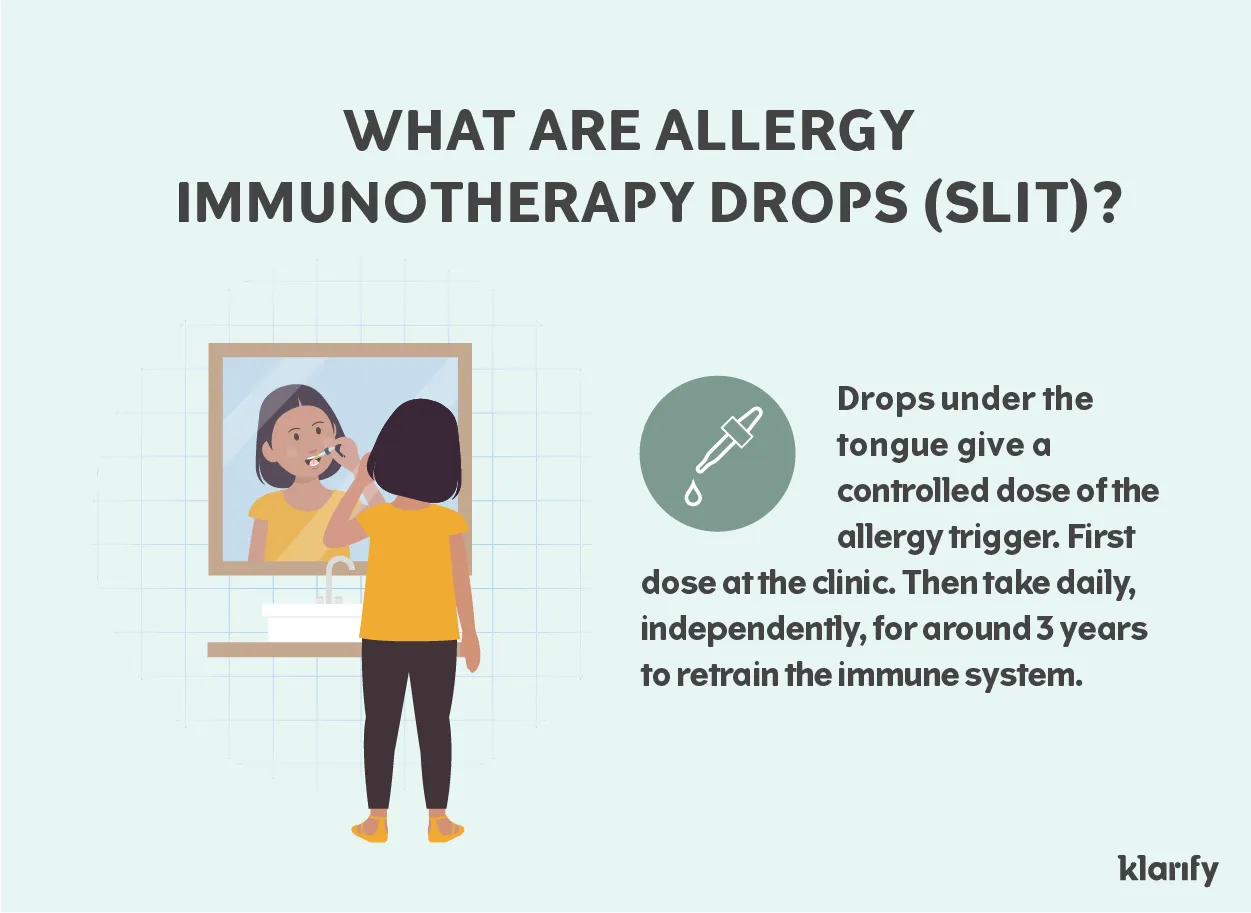
Allergy immunotherapy tablets and drops (SLIT)
Sublingual immunotherapy tackles respiratory allergies, like pollen and dust mites.12
The recommendation is to begin a course of sublingual immunotherapy 2-4 months before your pollen season.12 That’s whether you follow a typical year-round schedule or a seasonal one. The latter means taking medication either before or during pollen season, or both, and having a treatment-free period.12,14 For year-round allergies, treatment is best started when avoidance measures are in place and exposure is lowest.12
Your doctor will explain why the treatment goes under the tongue, as well as how often to take it and where. Read the patient leaflet carefully too.
Why do allergy immunotherapy tablets and drops go under the tongue?
Allergy immunotherapy tablets and drops contain an extract prepared from a natural source of the trigger. Your digestive system breaks down these allergenic proteins too fast for treatment to be effective if you swallow straight away. Whereas putting the medication under your tongue delivers it to cells that communicate with your immune system and effect its retraining, according to the study How does sublingual immunotherapy work? (Journal of Allergy and Clinical Immunology, September 200715).
Sublingual tablets dissolve in saliva very quickly.10 It may only take seconds but the typical advice is to wait at least 1 minute before swallowing. That’s to make sure you don’t wash the allergen down into your stomach before your body has absorbed it.16
Where do you take allergy immunotherapy tablets and drops?
The first dose of sublingual allergy treatment always happens at the doctor’s office while staff monitor you for possible side effects.12 The same goes if you have a gap of more than 7 days.17 After that you can take the medication independently at home, on holiday or when travelling for work.
You’ll need somewhere to wash and dry your hands before opening the blister pack. The tablets are fragile and could dissolve on damp fingers. Also wash hands if you’re using allergy drops. If you get an itchy mouth, it can be helpful to take an oral antihistamine beforehand.12 Or try sucking a cooling ice cube afterwards.
How often do you take allergy immunotherapy tablets and drops?
You take the tablet or drops once a day, typically as part of your morning routine. You might notice symptoms reducing after only six months or when the next pollen season starts.11 But a full course of treatment takes at least 3 years.10 Retraining the immune system so that the effect lasts is a gradual process.

Allergy immunotherapy injections (SCIT)
You may be having immunotherapy injections for a respiratory allergy or for reactions to insect venom. There are usually two phases: updosing as the amount of allergen in the injection gradually increases, and then maintenance. Treatment takes at least 3 years unless your doctor suggests a more intense, shorter updosing phase. In the UK, rush protocols are more likely to be used for venom immunotherapy than respiratory allergies.11 But it is still relatively rare, according to the British Society for Allergy & Clinical Immunology.18
Read on to find out who gives allergy injections, how often and what happens if you miss an appointment. You’ll probably have more questions so do talk to your doctor. The patient leaflet is a handy source of information that you can keep referring to.
Who gives allergy immunotherapy injections?
Injections always happen at your doctor’s office in case of a rare severe allergic reaction. You’ll stay there for 30 minutes to an hour after each dose while staff monitor your response, ready with treatment it you need it.11,12
How often do you have allergy immunotherapy injections?
Expect to have allergy immunotherapy injections at least once a week for the first few months, then an injection every 4-8 weeks during the maintenance phase. Faster protocols can accelerate the initial updosing phase with more than one injection each clinic visit. Some clinics may consider this option for venom immunotherapy because successful treatment reduces the risk of a bee or wasp sting causing a fatal allergic reaction so people will be safer sooner.11,19,20
What happens if you miss an injection?
Missing an injection can disrupt a carefully scheduled course of allergy immunotherapy and make the treatment less effective. Doctors might decide to adjust the next dose downwards again, depending how long it’s been since your last injection (Gaps in Allergen Immunotherapy Administration and Subcutaneous Allergen Immunotherapy Dose Adjustment Schedules: Need for Prospective Data, published in Annals of Asthma, Allergy & Immunology 2020). They may have to take more precautions to counter the risk of treatment triggering anaphylaxis.21

What are the differences between allergy immunotherapy with injections and with tablets or drops?
| Tablets and drops | Injections | |
|---|---|---|
| What triggers does it treat? | Grass pollen, tree pollen and dust mites6 | Grass and tree pollen, dust mites, pet dander, insect stings6 |
| How often do you take it? | Daily dose12 | Typically at least once a week for the first few months, then every 4-8 weeks11,19,20 |
| Where do you take it? | First one at the doctor’s office, after that at home12 | Always at the doctor’s office12 |
| How long does treatment take? | At least 3 years10 | At least 3 years10 |
Can you have allergy immunotherapy for multiple allergies?
Treating one allergen could reduce the symptoms caused by cross-reactions to substances very like your trigger, for instance related species of grass if that’s what you’re allergic to.12 Pollen allergy immunotherapy may also help some people with oral allergy syndrome (OAS) or pollen food syndrome (PFS).22
This form of cross-reaction may affect up to a third of people with hay fever. Depending on your specific pollen allergy, eating particular fresh fruit and vegetables may cause discomfort where the food touches you.22
What are possible side effects of allergy immunotherapy?
The possible side effects of allergy immunotherapy range from mild local symptoms to severe allergic reactions, both of which you and your doctor will be prepared for.12 They tend to happen at the start and lessen after a few weeks of retraining your immune system.23
Adverse reactions don’t affect everyone. The local side effects are slightly different for allergy tablets and drops versus injections. But systemic side effects – the ones that impact your whole body, possibly severely – are similar whichever form of treatment. So allergy shots and the first dose of allergy tablets or drops always happen at the doctor’s office where staff can monitor you.12
The patient information leaflet will list all the potential side effects for your type of medication. It could also include hay fever.24 Make sure to tell your doctor about any new symptoms.

Local side effects of allergy immunotherapy tablets and drops
The most common local side effects of allergy immunotherapy tablets and drops are an itchy mouth, tongue or ears, a prickly and possibly swollen mouth, and an irritated throat. It usually lasts around 30 to 60 minutes. Some people may also have nausea or abdominal pain.23
Taking an antihistamine beforehand may help, if needed.12 Otherwise these reactions usually don’t need treatment.
Local side effects of allergy injections
Local side effects of allergy injections can include swelling around the site and reddened skin. This shouldn’t be too bothersome and will mostly clear up on its own but antihistamine or a cold compress may also help calm the skin reactions, according to Allergy UK.11
As to what’s normal in terms of a swelling arm after an allergy shot, your doctor is the best judge of your reaction. But they may change the allergen dose next time if the bump is bigger than 10cm across.12
Systemic side effects of allergy immunotherapy
It’s uncommon but allergy immunotherapy can cause anaphylaxis, a systemic allergic reaction that can be life-threatening. This happens about once in every 33,300 injections and once in every 100 million doses of allergy immunotherapy tablets. There have been rare reports of fatalities but only linked to allergy injections (The Global Development and Clinical Efficacy of Sublingual Tablet Immunotherapy for Allergic Diseases. Allergology International, July 201823).
Most anaphylactic reactions happen within 30 minutes so you’ll stay at the doctor’s office for at least that long after each injection and after your first tablet or drops.12
Signs and symptoms of anaphylaxis include:25
- Widespread skin reactions, such as hives, itching, flushing or paleness
- Swollen tongue or throat
- Wheezing and difficulty breathing
- Nausea, vomiting or diarrhoea
- Weak or rapid pulse
- Drop in blood pressure (hypotension)
- Dizziness or fainting
Can children have allergy immunotherapy?
Children can have allergy immunotherapy and the options open to them depend on their allergy trigger, age and general health. Usually kids must be at least 5 years old so they can describe how they’re feeling in case of side effects.26
Successful treatment can change an allergic child’s life, freeing them from reliance on short-term symptom relief. It also reduces the risk of them developing another allergy and progressing to more troublesome symptoms or conditions like allergic asthma.5,12
Do I need to be diagnosed before getting allergy immunotherapy?
Yes, you do need a diagnosis because allergy immunotherapy is a targeted treatment for a specific allergy trigger such as grass pollen, dust mites or insect venom. The doctor may ask you to do a skin prick test or an allergy blood test.1 They’ll also need to know about your allergy symptoms and medical history, and whether allergy runs in the family.4 This helps them identify whether allergy immunotherapy is the right treatment and in what form.
Preparing for your clinic visit and 7 frequently asked questions for your doctor
Keeping an allergy diary will help you answer the doctor’s questions. Make a note of your symptoms, when they happen and the possible trigger. And here are some questions you could ask:
1. What allergy tests will you do to make the diagnosis?
2. What treatment do you suggest and might allergy immunotherapy be right for me?
3. How do you think my allergies could develop in the longer term?
4. Do you have any tips on avoiding my trigger and managing my condition?
5. How will having allergies affect my exercise routine and other hobbies, travel plans, home and work environment (or school if it’s a child), pets, diet and so on?
6. What should I do if I have other health factors to consider (pregnancy is relevant too)?
7. Kids can inherit allergies so should I bring my child to be tested if they’re getting symptoms too.

The short version
Successful allergy immunotherapy can be life-changing. It gradually retrains your immune system by exposing you in a controlled way to the substance you’re allergic to. The aim is to start reducing your allergy symptoms within a few months of beginning treatment and that the effect lasts after the course is finished.9,10,11
Treatment is available for grass pollen, tree pollen, insect stings, dust mites and pet dander. The form will depend on your trigger and how old you are.6 Options include tablets or drops (sublingual immunotherapy), which is the modern form, or injections (subcutaneous immunotherapy).3 Treatment takes at least 3 years and up to 5 years.10,11
Fewer allergy symptoms should mean less reliance on short-term allergy medications. Allergy immunotherapy also addresses the underlying cause of your allergy. It can help lower the risk of developing new allergies or conditions, including allergic asthma. A proper diagnosis is crucial before starting treatment and your doctor will advise you if the treatment might be an option.
klarify takes allergy science and makes it simple, and we have rigorous process for doing this. We use up-to-date and authoritative sources of information. Medical experts review our content before we share it with you. They and the klarify editorial team strive to be accurate, thorough, clear and objective at all times. Our editorial policy explains exactly how we do this.
References
1. British Society for Immunology. Allergy briefing. Retrieved 18 December 2025.
https://www.immunology.org/policy-and-public-affairs/briefings-and-position-statements/allergy
2. Penagos M, Durham SR. Duration of allergen immunotherapy for inhalant allergy. Current Opinion in Allergy and Clinical Immunology 19(6):p 594-605, December 2019. DOI: 10.1097/ACI.0000000000000585.
https://journals.lww.com/co-allergy/abstract/2019/12000/duration_of_allergen_immunotherapy_for_inhalant.8.aspx
3. Gutermuth J, Grosber M, Pfaar O, Bergmann KC, Ring J. 111 years of allergen-immunotherapy: A long and successful history of the only available disease-modifier in allergic diseases. Allergol Select. 2022;6:248-258. doi:10.5414/ALX02330E.
https://pubmed.ncbi.nlm.nih.gov/36457720/
4. European Academy of Allergy and Clinical Immunology. Global atlas of allergy. Retrieved 19 November 2025.
https://eaaci-cdn-vod02-prod.azureedge.net/KnowledgeHub/education/books/Global%20Atlas%20of%20Allergy%20-%20English%20Version.pdf
5. National Institute for Health and Care Excellence. Scenario, Management (Allergic rhinitis). Revised January 2024. Retrieved 19 December 2025.
https://cks.nice.org.uk/topics/allergic-rhinitis/management/management/
6. National Institute for Health and Care Excellence. Antihistamines, allergen immunotherapy and allergic emergencies. Retrieved 19 December 2025.
https://bnfc.nice.org.uk/treatment-summaries/antihistamines-allergen-immunotherapy-and-allergic-emergencies/
7. Patel RH, Mohiuddin SS. Biochemistry, Histamine. [Updated 2023 May 1]. In: StatPearls [Internet]. Treasure Island (FL): StatPearls Publishing; 2025 Jan.
https://www.ncbi.nlm.nih.gov/books/NBK557790/
8. Hodgens A, Sharman T. Corticosteroids. [Updated 2023 May 1]. In: StatPearls [Internet]. Treasure Island (FL): StatPearls Publishing; 2025 Jan.
https://www.ncbi.nlm.nih.gov/books/NBK554612/
9. Dhami S, Nurmatov U, Arasi S, et al. Allergen immunotherapy for allergic rhinoconjunctivitis: A systematic review and meta-analysis. Allergy. 2017;72(11):1597-1631. doi:10.1111/all.13201.
https://onlinelibrary.wiley.com/doi/10.1111/all.13201
10. Shamji MH. Sharif H, Layhadi JA, et al. Diverse immune mechanisms of allergen immunotherapy for allergic rhinitis with and without asthma. Journal of Allergy and Clinical Immunology, Volume 149, Issue 3, 791 – 801. doi: 10.1016/j.jaci.2022.01.016.
https://www.jacionline.org/article/S0091-6749(22)00086-0/fulltext
11. Allergy UK. Your quick guide to: immunotherapy. Retrieved 19 December 2025.
https://www.allergyuk.org/wp-content/uploads/2024/01/Immunotherapy-v5.pdf
12. Roberts G, Pfaar O, Akdis A, Ansotegui IJ, Durham SR, Gerth van Wijk R, Halken S, Larenas-Linnemann D, Pawankar R, Pitsios C, Sheikh A, Worm M, Arasi S, Calderon MA, Cingi C, Dhami S, Fauquert JL, Hamelmann E, Hellings P, Jacobsen L, Know EF, Lin SY, Maggina P, Mösges R, Oude Elberink JNG, Pajno GB, Pastorello EA, Penagos M, Rotiroti G, Schmidt-Weber CB, Timmermans F, Tsilochristou O, Varga E-M, Wilkinson JN, Williams A, Zhang L, Agache I, Angier E, Fernandez-Rivas M, Jutel M, Lau S, van Ree R, Ryan D, Sturm GJ, Muraro A. European Journal of Allergy and Clinical Immunology (EAACI) Guidelines on Allergen Immunotherapy. Allergic rhinoconjunctivitis. 23 September 2017. doi.org/10.1111/all.13317
https://onlinelibrary.wiley.com/doi/10.1111/all.13317
13. Campisi L, Yong PFK, Karim MY, Kasternow B. Illustrative Case Series and Narrative Review of Therapeutic Failure of Immunotherapy for Allergic Rhinitis. Therapeutic Advances in Allergy and Rhinology. 2020. doi.org.10.1177/2152656720943822.
https://journals.sagepub.com/doi/10.1177/2152656720943822
14. Demoly P, Passalacqua G, Calderon MA, Yalaoui T. Choosing the optimal dose in sublingual immunotherapy: Rationale for the 300 index of reactivity dose. Clin Transl Allergy. 2015;5:44. doi:10.1186/s13601-015-0088-1.
https://onlinelibrary.wiley.com/doi/10.1186/s13601-015-0088-1
15. Frew AJ. How does sublingual immunotherapy work? Journal of Allergy and Clinical Immunology. Vol 120, issue 3: p533-536, Sept 2007.
https://www.jacionline.org/article/S0091-6749(07)01461-3/fulltext
16. Lund K, Kito H, Blem Skydtsgaard M, et al. The Importance of Tablet Formulation on Allergen Release Kinetics and Efficiency. Clinical Therapeutics: vol 41, issue 4, 2019; p742-753. doi.org/10.1016/j.clinthera.2019.02.008.
https://www.sciencedirect.com/science/article/pii/S0149291819300682
17. Larenas-Linnemann DE, Epstein T, Ponda P, et al. Gaps in allergen immunotherapy administration and subcutaneous allergen immunotherapy dose adjustment schedules. Ann Allergy Asthma Immunol. 2020;125(5):505-506.e2. doi:10.1016/j.anai.2020.07.015.
https://pmc.ncbi.nlm.nih.gov/articles/PMC7368643/
18. British Society for Allergy & Clinical Immunology. Immunotherapy. Retrieved 2 February 2026.
https://www.bsaci.org/resources/allergy-management/immunotherapy/
19. British Society for Allergy & Clinical Immunology. Administration of Sub-Cutaneous Immunotherapy. Retrieved 3 February 2026.
https://www.bsaci.org/wp-content/uploads/2019/12/SCITSOPv3SignedoffbyNB.pdf
20. Krishna MT, Ewan PW, Diwakar L, et al. Diagnosis and management of hymenoptera venom allergy: BSACI guidelines. Clin Exp Allergy. 2011;41(9):1201-1220. doi:10.1111/j.1365-2222.2011.03788.x.
https://onlinelibrary.wiley.com/doi/epdf/10.1111/j.1365-2222.2011.03788.x
21. Larenas-Linnemann DE, Epstein T, Ponda P, Bernstein D, Williams P, Creticos P. Gaps in allergen immunotherapy administration and subcutaneous allergen immunotherapy dose adjustment schedules: Need for prospective data. Ann Allergy Asthma Immunol. 2020;125(5):505-506.e2. doi:10.1016/j.anai.2020.07.015
https://pmc.ncbi.nlm.nih.gov/articles/PMC7368643/
22. Carlson G, Coop C. Pollen food allergy syndrome (PFAS): A review of current available literature. Annals of Allergy, Asthma & Immunology. vol 123, issue 4, p359-365, Oct 2019. doi.org/10.1016/j.anai.2019.07.022.
https://www.annallergy.org/article/S1081-1206(19)30540-X/fulltext#secsectitle0045
23. Nolte H, Maloney J. The global development and clinical efficacy of sublingual tablet immunotherapy for allergic diseases. Allergol Int. 2018 Jul;67(3):301-308. doi: 10.1016/j.alit.2018.03.008.
https://www.ncbi.nlm.nih.gov/pubmed/29759659
24. InformedHealth.org. Hay fever: Allergen-specific immunotherapy (desensitization) in the treatment of allergies. [Updated 2020 Apr].
https://www.ncbi.nlm.nih.gov/books/NBK279487/
25. Cardona V, Ansotegui IJ, Ebisawa M, El-Gamal Y, Fernandez Rivas M, Fineman S, Geller M, Gonzalez-Estrada A, Greenberger PA, Sanchez Borges M, Senna G, Sheikh A, Kase Tanno L, Thong BY, Turner PJ, Worm M. World Allergy Organization Anaphylaxis Guidance 2020
https://www.worldallergyorganizationjournal.org/action/showPdf?pii=S1939-4551%2820%2930375-6
26. Pitsios C, Demoly P, Bilò MB, et al. Clinical contraindications to allergen immunotherapy: an EAACI position paper. Allergy 2015; 70: 897–909.
https://onlinelibrary.wiley.com/doi/10.1111/all.12638
GB-NPR-2600019, May 2026